The Role of Tolerances in Metal Fabrication: What Every Designer Should Know
Tolerances in metal fabrication are one of the most critical — and yet most commonly misunderstood — aspects of architectural metalwork. However, when tolerances are unclear, unrealistic, or overlooked entirely, even strong design intent can result in misaligned components, installation difficulties, and unexpected cost increases. As a result, conflicts often arise between designers, fabricators, and installers.
In architectural projects where metal interfaces with glass, wood, stone, or other finishes, tolerances directly influence fit, visual quality, and long-term performance. Therefore, understanding how tolerances function — and how they translate from drawings into fabrication — is essential for achieving predictable, high-end results.

What Are Tolerances in Metal Fabrication?
Simply put, a tolerance defines the acceptable range of variation from a specified dimension. Because no fabricated metal component can be produced to an absolute, perfect measurement, tolerances exist to account for real-world manufacturing limitations.
For example:
- ✔ A dimension of 1000 mm ±1 mm allows a finished part to measure anywhere between 999 mm and 1001 mm
- ✔ Conversely, a tighter tolerance such as ±0.25 mm requires greater precision, more setup time, and additional quality control
Consequently, tolerances play a direct role in determining fabrication methods, inspection requirements, and overall cost.
Why Tolerances Matter in Architectural Metalwork
1. Metal Movement Is Inevitable
First and foremost, all metals expand and contract due to temperature changes. However, stainless steel, brass, bronze, and aluminum each respond differently to thermal variation. If tolerances fail to account for this movement, components that fit perfectly in the shop may bind, distort, or misalign on site.
As a result, insufficient tolerance planning often leads to installation challenges that could have been avoided during design.
2. Tight Tolerances Increase Cost
While precision is sometimes necessary, tighter tolerances always come at a price. Specifically, they require:
- ✔ Additional machining
- ✔ Longer setup times
- ✔ Increased inspection and rejection risk
Therefore, when tolerances are specified tighter than functionally required, fabrication costs increase without delivering meaningful visual or performance benefits.
3. Installation Relies on Tolerance Flexibility
Meanwhile, installers depend on reasonable tolerances to accommodate:
- ✔ Field conditions
- ✔ Substrate irregularities
- ✔ Coordination with other trades
If tolerance allowances are unrealistic, fabrication issues simply shift downstream. Consequently, problems emerge during installation — where corrections are significantly more expensive and time-consuming.

How to Read Tolerances on Drawings
Explicit Tolerances
Explicit tolerances are written directly next to dimensions, such as:
- ✔ ±1 mm
- ✔ +0 / −2 mm
- ✔ 1000 mm ±0.5 mm
Importantly, explicit tolerances always override general tolerance notes. Therefore, they should be used carefully and only where necessary.
General Tolerance Notes
In many architectural drawings, a general note appears, such as:
“Unless otherwise noted, tolerances are ±3 mm.”
However, designers should verify that these general tolerances are:
- ✔ Realistic for the material
- ✔ Appropriate for the application
- ✔ Consistent across all drawing sets
Otherwise, conflicting assumptions can quickly arise between design and fabrication teams.
Decimal-Based Tolerances
In some cases, tolerances are implied by decimal places:
- ✔ 1000 = ±3 mm
- ✔ 1000.0 = ±1 mm
- ✔ 1000.00 = ±0.25 mm
Although this system is common in machining, it is frequently misunderstood in architectural documentation. As a result, assumptions made by designers may not align with fabrication expectations.
Common Tolerance Pitfalls Across Materials
Stainless Steel
Stainless steel is often specified with unnecessarily tight tolerances. However, achieving high precision typically requires additional machining time. Moreover, aggressive polishing used to “correct” dimensions can compromise surface consistency.
Brass and Bronze
Because brass and bronze are softer metals, they are easier to machine but also easier to damage. Consequently, combining tight tolerances with decorative finishes increases the risk of rejection. In addition, polishing removes material, which directly affects final dimensions.
Aluminum
Aluminum, on the other hand, is highly sensitive to thermal movement. Therefore, long aluminum components require deliberate expansion allowances. If tolerances are overly restrictive, warping or distortion may occur during fabrication or installation.
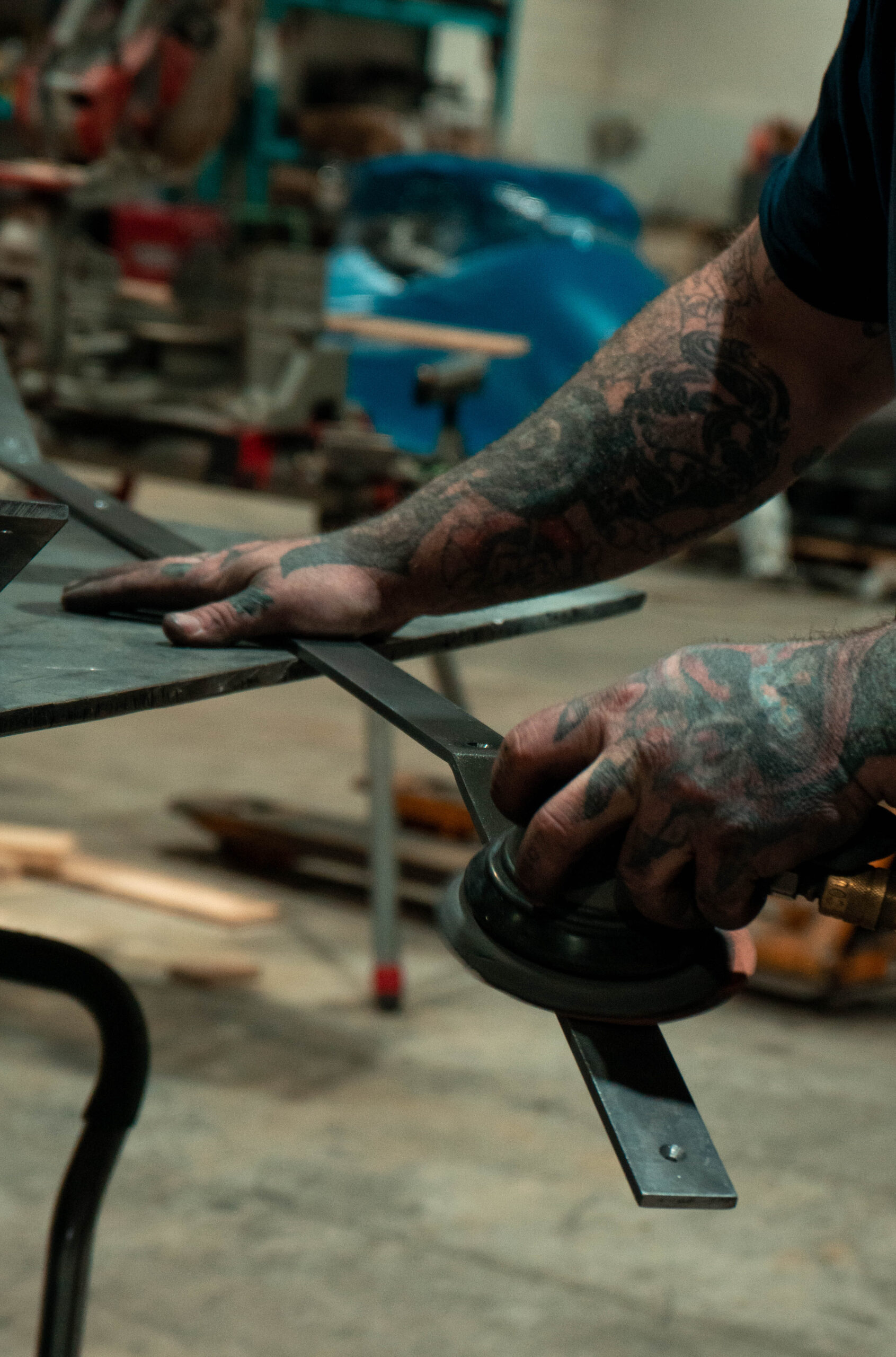
The Impact of Finishes on Tolerances
Although finishes are often treated as purely aesthetic, they directly affect tolerances. For instance:
- ✔ Polishing removes material
- ✔ Coatings add thickness
- ✔ Chemical patinas alter surface dimensions
As a result, finish selection should always be considered during tolerance planning. Therefore, for high-end architectural projects, physical finish samples and mockups are essential for validating both appearance and dimensional outcomes before full production begins.
Best Practices for Designers and Specifiers
1. Separate Functional and Visual Requirements
First, determine whether a dimension affects performance, alignment, or structure. Then, consider whether it is visually critical or concealed. Ultimately, not every dimension requires machining-level precision.
2. Engage the Fabricator Early
Early collaboration allows fabricators to recommend realistic tolerances, suggest value-engineering opportunities, and identify high-risk details. As a result, fewer revisions are needed later in the process.
3. Use Mockups Strategically
Finally, mockups help align expectations for fit, finish, and transitions between materials. In many cases, they prevent issues that would otherwise surface during installation — saving both time and cost.
Industry Reference
For general dimensional guidance, designers may refer to ISO 2768, an international standard that defines general tolerances for linear and angular dimensions:
https://www.iso.org/standard/50316.html
Ultimately, tolerances are not a technical afterthought — they are a design decision. When tolerances are clearly defined, realistically specified, and coordinated early, fabrication becomes predictable, installation becomes smoother, and design intent is preserved from drawing to final installation.
See more
- Laser-Cut Metal Solutions for Ceilings and Partitions: Function Meets Design
- Durability Meets Design: Why Stainless Steel Elegance Is the Architect’s Secret Weapon
- Powder-Coated Metal: Durable, Customizable, and Surprisingly Elegant
- The Art of Patina: Creating Distinctive Metal Finishes for Architectural Designs
- The Benefits of Custom Brass Fabrication in Luxury Interiors
- Custom High-End Metal Features that Elevate Luxury Interiors: A Design Guide for Custom Home Builders and Interior Designers