What Architects Should Know Before Designing With Bronze, Brass, or Stainless Steel
When architects select materials for high-end architectural projects, bronze, brass, and stainless steel often stand out for their durability, aesthetics, and timeless appeal. However, beyond visual impact, each metal behaves differently during fabrication, installation, and long-term use. Therefore, architects must understand these differences early in the design and specification phase to avoid costly revisions later.
Moreover, informed material decisions help architects translate design intent accurately from drawings to finished installations.
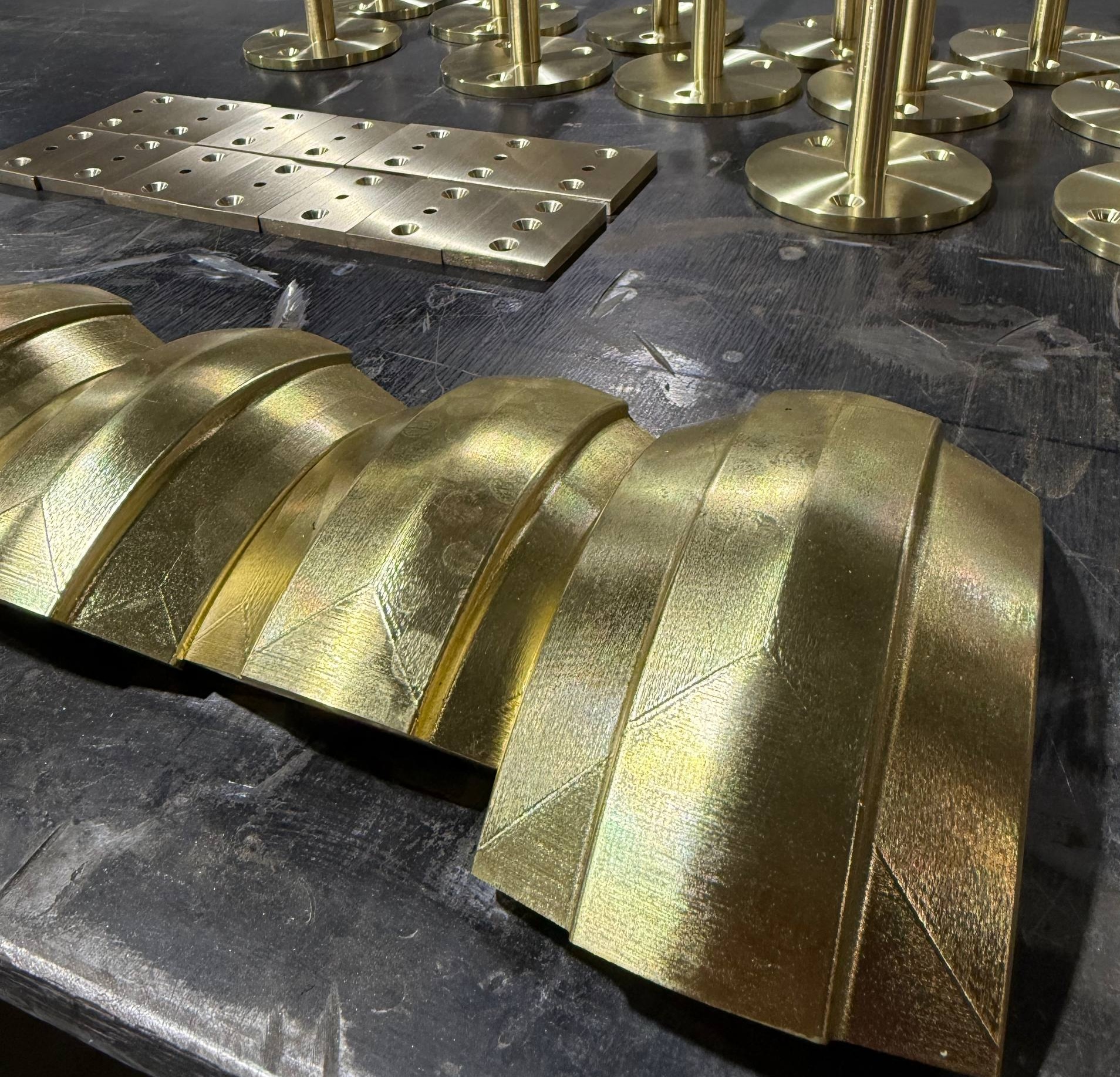
Why Material Choice Matters in Architectural Design
In architectural metalwork, material selection extends far beyond aesthetics. Instead, metals directly influence structural performance, fabrication tolerances, maintenance requirements, and service life. For example, copper-based alloys such as bronze and brass introduce warmth and character, while stainless steel delivers strength and consistency.
As a result, the right material choice directly impacts durability, fabrication complexity, and long-term project value.
Understanding Material Behavior
Bronze and Brass
Architects frequently specify bronze and brass for architectural applications because these copper alloys offer excellent corrosion resistance and visual depth. Over time, these metals naturally oxidize and develop a protective patina that enhances appearance rather than degrading it. Consequently, designers often choose them for feature elements, wall cladding, railings, and decorative panels.
In addition, copper alloys remain softer than stainless steel. Because of this property, fabricators can form and machine them more easily, although they must manage tolerances carefully during fabrication. Alloy composition also affects color, hardness, and finishing results, which makes precise specification essential.
The material behavior described here aligns closely with guidelines published by the Copper Development Association (CDA), a widely used reference for architects and specifiers working with copper alloys.
(Source: https://www.copper.org)

Stainless Steel
Stainless steel performs very differently from copper alloys. Its higher strength and stiffness make it ideal for applications that demand precision, durability, and structural consistency. Furthermore, chromium content creates a self-healing passive layer that protects the surface in aggressive environments.
However, stainless steel exhibits significant spring-back during bending operations. Therefore, fabricators must carefully plan tooling and forming methods to achieve accurate geometries. Additionally, architects should select grades deliberately; for example, 316 stainless steel performs better in coastal or high-moisture environments than 304.
Tolerances and Precision in Architectural Metalwork
In custom architectural metalwork, tolerances play a critical role. Even minor deviations can disrupt alignment with adjacent materials such as glass, stone, or millwork. As a result, millimeter-level precision often determines whether an installation feels refined or compromised.
While stainless steel supports tighter tolerances, bronze and brass require greater allowances due to their softness and movement characteristics. Therefore, architects should specify tolerances that reflect both design intent and fabrication reality.
Finish Selection: More Than a Visual Choice
Finishes influence far more than appearance alone. On one hand, finishes establish the visual language of a space. On the other hand, they determine maintenance requirements, aging behavior, and durability.
For instance, brushed finishes reduce the visibility of fingerprints and wear. Polished finishes deliver dramatic impact but require more frequent maintenance. Meanwhile, patinated finishes introduce depth and character but demand controlled processes and clear approval standards.
Because finish samples rarely represent full-scale conditions, architects benefit from early coordination with fabricators to align expectations with achievable results.
Thermal Expansion and Environmental Considerations
All metals expand and contract in response to temperature changes. Consequently, long metal runs, exterior applications, and mixed-material assemblies require careful detailing.
Copper alloys and stainless steel expand at different rates. Therefore, architects must incorporate expansion joints, slip connections, and flexible anchoring methods to prevent distortion, stress buildup, or long-term failure.

The Importance of Early Fabricator Collaboration
Early collaboration with an experienced architectural metal fabricator significantly improves project outcomes. During this phase, architects receive practical feedback on tolerances, fabrication methods, and cost-saving alternatives.
As a result, teams often identify value-engineering opportunities before shop drawings begin, which reduces change orders and minimizes construction delays.
Key Takeaways for Architects
Before finalizing designs or specifications, architects should confirm:
-
✔ Exact alloy type and grade
-
✔ Finish expectations and maintenance requirements
-
✔ Realistic tolerances based on fabrication limits
-
✔ Thermal movement allowances
-
✔ Early fabricator involvement
Ultimately, when architects understand how bronze, brass, and stainless steel behave in real-world conditions, they make better design decisions, streamline execution, and deliver architectural metalwork that performs and endures.
See more
- The Rise of Minimalist Metal Designs: Trends in Simple, Clean Metal Structures for Modern Interiors
- Fireplace Surrounds Reinvented: How Custom Metal Cladding Turns a Functional Element Into a Focal Point
- Why Custom Metal Screens Are the New Luxury Partition
- The Color of Metal: How Finishes Shape Mood and Atmosphere
- Collaboration in Design: How Metal Fabricators and Architects Create Excellence Together
- Top Trends in Architectural Metal Design for 2024