Brushed Metal Grain Direction: The Detail That Can Ruin an Otherwise Perfect Installation
Brushed metal plays a major role in high-end architectural and interior applications, but one seemingly minor detail—grain direction—can determine whether the finished installation looks seamless or noticeably wrong.
Fabricators can produce every panel to the correct dimensions, installers can maintain perfect levels and reveals, and the material can match the approved finish sample. However, if the grain changes direction from one panel to the next, the entire installation can immediately look inconsistent.
This issue affects brushed stainless steel, brass, bronze, aluminum, and other metals with directional finishes. Therefore, architects, designers, millwork companies, general contractors, and metal fabricators should establish grain direction during the design and coordination process—not after fabrication begins.
What Is Grain Direction in Brushed Metal?
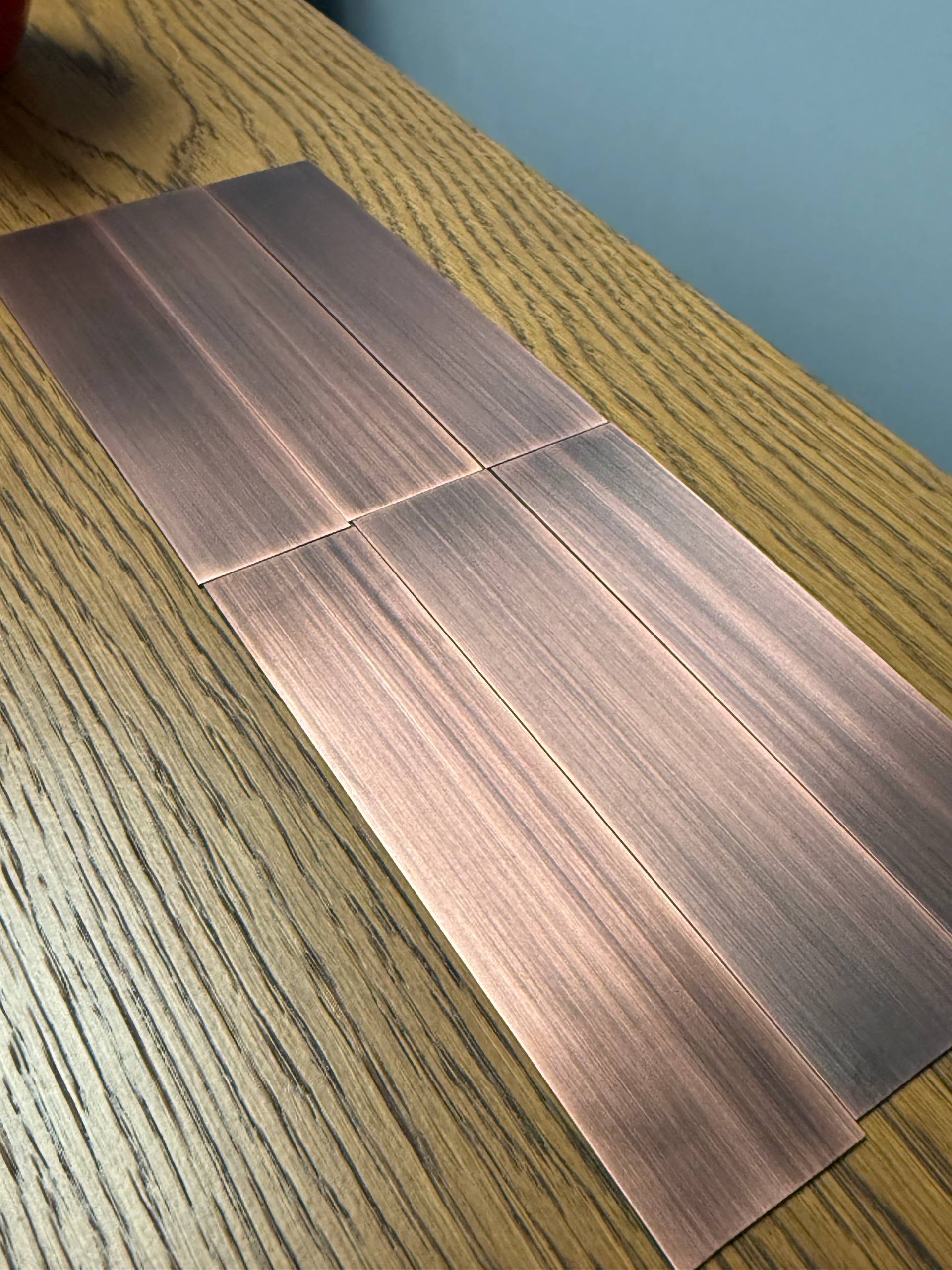
Manufacturers and metal finishers create a brushed finish by running an abrasive across the metal surface. This process produces thousands of fine, parallel lines that create what we commonly call the grain.
Depending on the application, the grain may run:
- ✔ vertically;
- ✔ horizontally;
- ✔ along the length of a component;
- ✔ across its width;
- ✔ or in a coordinated direction across several components.
The Australian Stainless Steel Development Association describes the commonly used No. 4 stainless steel finish as a directional surface created with abrasive belts. Its technical guidance also discusses matching surfaces and refinishing welded areas. For additional technical information, see ASSDA’s guide to No. 4 stainless steel finishes.
The key word here is directional.
Once a brushed metal finish has a visible direction, its orientation becomes part of the architectural design. As a result, project teams need to coordinate grain direction just as carefully as dimensions, joints, reveals, and finish selection.
Why Brushed Metal Grain Direction Is So Noticeable
Brushed metal interacts with light differently depending on the direction of its grain. Consequently, two pieces of the same material with the same finish can appear to have different shades simply because their grain runs in different directions.
Lighting can make this difference even more obvious. In particular, project teams should pay attention to:
- ✔ grazing architectural lighting;
- ✔ linear LED lighting;
- ✔ strong natural light;
- ✔ spotlights;
- ✔ large windows;
- ✔ and changing viewing angles.
For example, imagine five brushed stainless steel wall panels installed next to each other.
Four panels have vertical grain. One has horizontal grain.
Every panel may use exactly the same material and finish specification. Nevertheless, the horizontal panel can appear as though it came from completely different material.
Therefore, designers and fabricators should decide the grain direction before they release material for production.
Continuous Grain Across Multiple Panels
Large architectural features rarely consist of one piece of metal.
Instead, fabricators often divide wall cladding, elevator surrounds, reception desks, column covers, cabinet fronts, shelving systems, and long decorative elements into multiple sections.
Although joints separate these sections physically, the eye still reads the installation as one composition. Therefore, the grain should usually support that visual continuity.
Consider a wall that contains eight brushed brass panels. If every panel carries vertical grain, the entire wall can read as one continuous architectural surface.
However, rotate one panel 90 degrees and the visual continuity disappears.
Moreover, subtle joints can make grain inconsistencies even more noticeable. The cleaner the architectural composition becomes, the more easily the eye identifies a panel that does not match the surrounding finish.
Horizontal vs. Vertical Grain Is a Design Decision
No universal rule requires brushed metal grain to run vertically or horizontally. Both orientations can work well.
However, the project team should make the direction intentional.
Vertical grain can emphasize height and often works naturally on doors, wall panels, elevator surrounds, and vertical millwork.
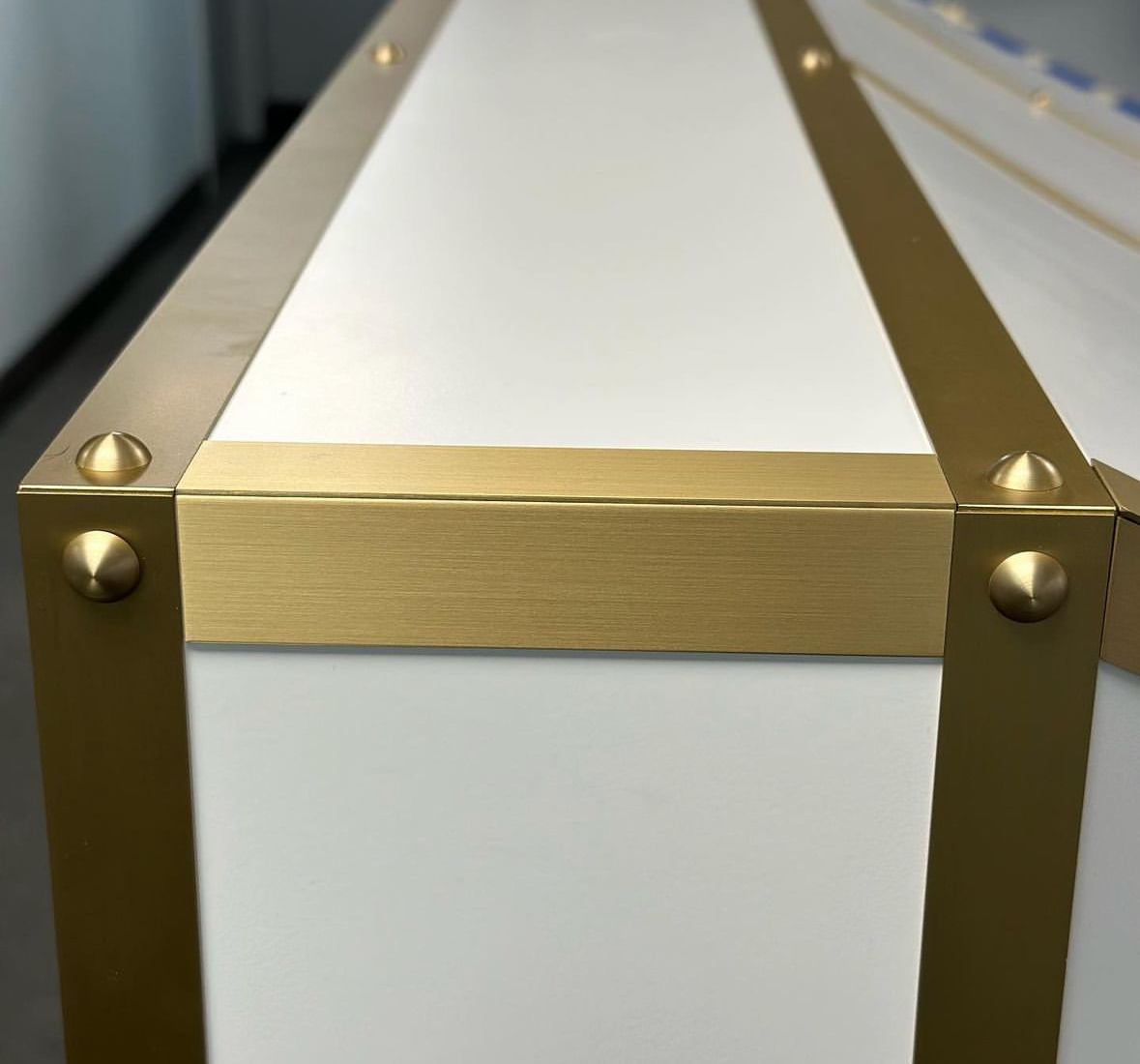
Horizontal grain, on the other hand, can reinforce long architectural lines on reception desks, shelving, trims, fascia panels, and other linear elements.
In many cases, the architecture itself should guide the decision.
For example, if a long brushed brass feature continues through several millwork sections, running the grain along the feature can reinforce the overall design.
Therefore, the project team should not ask only:
What finish are we using?
They should also ask:
What finish are we using, and which direction should it run?
Show Grain Direction on Shop Drawings
One simple step can prevent many grain-direction mistakes:
Put arrows on the shop drawings.
Designers and fabricators should clearly indicate the intended grain orientation for every visible brushed metal component.
This becomes especially important when an assembly contains several parts.
For example, a shop drawing for a metal-clad reception desk might show:
- ✔ vertical grain on front panels;
- ✔ horizontal grain on a countertop edge;
- ✔ continuous grain across adjacent doors;
- ✔ coordinated grain around returns;
- ✔ and a specific orientation at corners.
Once the project team documents and approves these directions, fabricators no longer need to interpret the designer’s intent during production.
Without grain arrows, however, different parties may make reasonable but conflicting assumptions.
The architect may expect vertical grain.
The millworker may expect horizontal grain.
Meanwhile, the metal fabricator may orient the parts to achieve the most efficient sheet layout.
Each approach can make sense independently. However, only one matches the intended design.
Sheet Layout Can Conflict With Visual Intent
Material optimization plays an important role in metal fabrication. Naturally, fabricators want to arrange components efficiently on each sheet and reduce waste.
However, brushed metal adds another constraint: direction.
For example, two components may fit perfectly beside each other if the fabricator rotates one of them 90 degrees. From a material-yield perspective, this arrangement may look ideal.
Visually, though, it may create a serious problem because rotating the part also rotates the grain.
Therefore, the fabrication team needs to understand grain requirements before nesting, cutting, and forming the components.
This consideration becomes especially important with expensive brass, bronze, or specialty stainless steel. Maintaining consistent grain may require additional material.
Even so, the cost of that additional material usually remains far lower than the cost of remaking finished components after installation.
Pay Special Attention to Corners
Corners add another layer of complexity because they bring multiple finished surfaces together.
For example, consider a brushed stainless steel column cover. Keeping the grain vertical on all four faces will often create a visually continuous result.
A reception desk can present a different challenge. The design may call for horizontal grain across the front but vertical grain on the end panels.
That transition may support the design. Alternatively, it may look like a fabrication mistake.
Therefore, the project team should review the relationship between adjacent faces before production starts.
This step becomes particularly important for folded and welded assemblies because fabricators may have very limited options to change grain orientation after they form the component.
Bending Does Not Eliminate Grain Direction
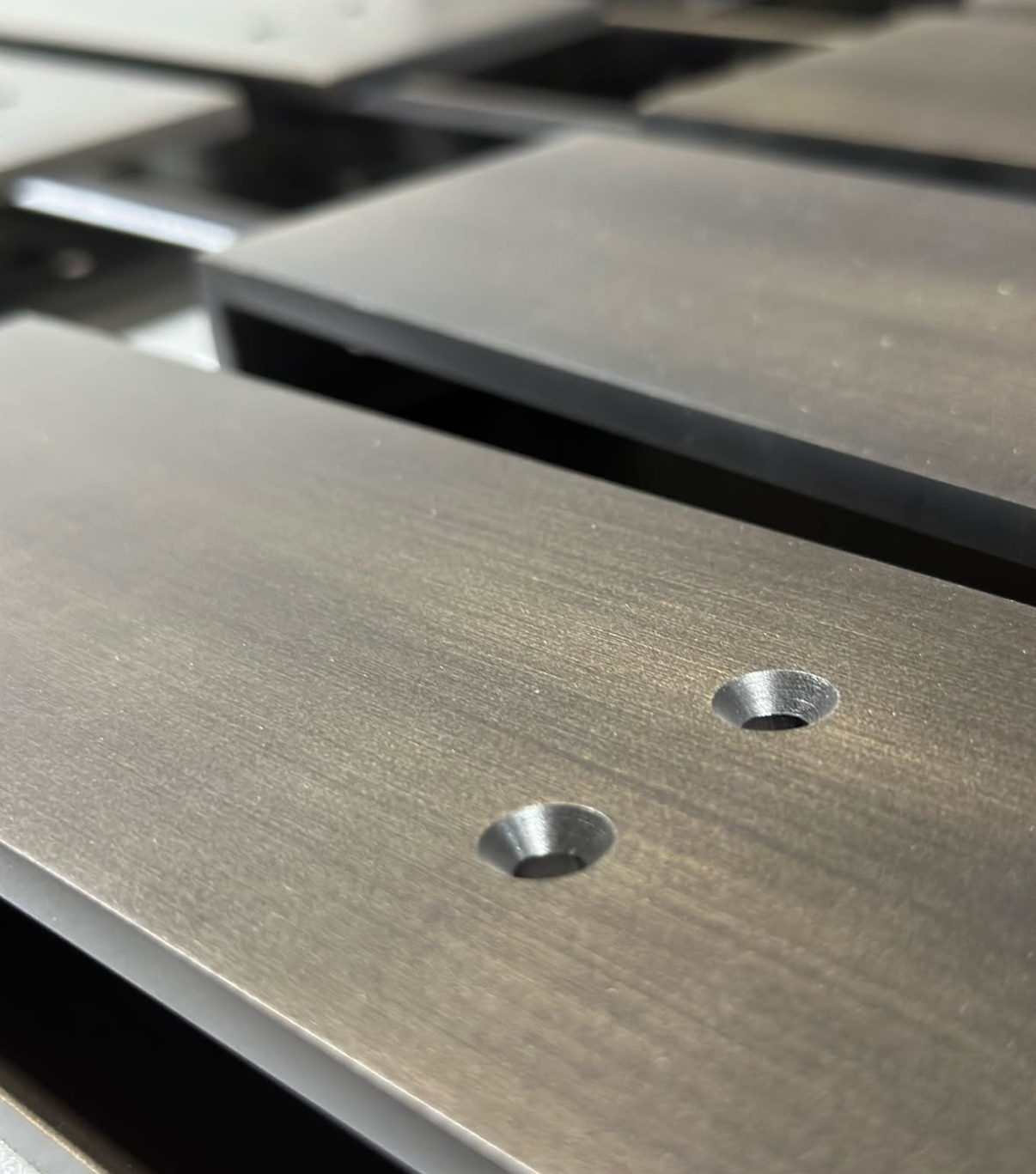
When fabricators fold brushed sheet metal, the grain remains visible across the finished surfaces.
As a result, they need to consider how that grain will travel around bends and returns.
A seemingly simple folded component may expose several visible faces. If the team considers grain direction only on the main face, the return may create an unexpected visual result.
Therefore, fabrication drawings should show both the finished geometry and the relationship between the original sheet orientation and the formed component.
This coordination matters particularly for:
- ✔ metal-clad doors;
- ✔ folded trims;
- ✔ column covers;
- ✔ shelving;
- ✔ reception desks;
- ✔ elevator surrounds;
- ✔ and decorative architectural profiles.
By planning these details before forming, fabricators can control how the finish transitions from one surface to another.
Welding Creates Another Challenge
Welding adds another variable to directional finishes.
After welding an architectural metal assembly, fabricators often grind the weld until the joint visually disappears. However, removing the weld only solves part of the problem.
The finishing team must also recreate the surrounding grain.
On directional brushed metal, the refinished area needs to follow the same grain direction and visual character as the surrounding surface. Otherwise, even a perfectly ground weld may remain clearly visible.
Therefore, high-end architectural fabrication requires close coordination between welding and finishing.
Ultimately, the client sees the final surface—not the individual fabrication operations that created it.
Replacement Panels Can Be Surprisingly Difficult
Replacement panels create another challenge.
Imagine a wall with ten brushed stainless steel panels. Several years after installation, one panel suffers damage.
Fabricating a new panel to the original dimensions may be straightforward. Matching its appearance, however, can prove much more difficult.
The replacement needs to coordinate with:
- ✔ the original grain direction;
- ✔ grain coarseness;
- ✔ surface finish;
- ✔ existing wear;
- ✔ surrounding panels;
- ✔ and potentially the original material batch.
Furthermore, architectural lighting can exaggerate even minor differences between the original installation and a new panel.
For that reason, project teams should retain finish records, approved samples, and relevant fabrication information for highly visible installations. These records can make future replacements significantly easier.
Control Grain Direction Throughout Fabrication
Directional sheet material often arrives with protective film. The film protects the finished surface during cutting, forming, transportation, and installation.
However, fabricators should not rely solely on the film to track grain orientation.
Instead, they should identify the material direction and maintain that information throughout fabrication.
This becomes increasingly important after the team cuts a large sheet into smaller components. At that point, workers can easily lose track of the original orientation.
Therefore, clear part identification and grain arrows provide a simple but effective quality-control measure.
Coordinate Grain Direction With Joints
Joint planning and grain planning should happen together.
A carefully positioned joint can blend naturally into an architectural composition. However, if the grain changes direction at that joint, the transition can suddenly become much more visible.
For long architectural runs, the project team should review the following elements as one coordinated system:
- ✔ panel divisions;
- ✔ joint locations;
- ✔ grain direction;
- ✔ surrounding millwork;
- ✔ lighting;
- ✔ corners;
- ✔ door openings;
- ✔ and installation sequence.
In other words, the goal goes beyond fabricating individual pieces correctly.
Instead, every component should contribute to one intentional architectural element.
Small Samples Have Limitations
A physical finish sample remains essential when approving brushed metal. However, a small sample cannot always demonstrate how the grain will behave across a large installation.
For example, a 4-inch brushed brass sample may look excellent in someone’s hand.
Now imagine the same finish across a 12-foot reception desk under continuous linear lighting.
The visual effect can change dramatically.
Therefore, for large or highly visible installations, designers should consider reviewing larger samples or mockups under lighting conditions similar to those in the finished space.
Additionally, comparing vertical and horizontal samples side by side can quickly demonstrate how much orientation changes the appearance of the same material.
This simple exercise can help the project team make the grain decision before fabrication rather than discovering the difference after installation.
A Simple Brushed Metal Grain-Direction Checklist
Before releasing directional metal for fabrication, the project team should confirm:
- ✔ Does the selected brushed metal finish have a directional grain?
- ✔ Do the shop drawings clearly show grain orientation?
- ✔ Should adjacent panels maintain continuous grain?
- ✔ How should the grain transition at corners and returns?
- ✔ How will the team orient formed pieces before bending?
- ✔ Will welded areas require refinishing?
- ✔ Does the sheet layout preserve the required direction?
- ✔ Do joint locations coordinate with the grain direction?
- ✔ Has the team reviewed the finish under representative lighting?
- ✔ Does the project have an approved physical sample for reference?
Although these questions may seem minor compared with the overall complexity of an architectural project, answering them early can prevent expensive problems later.
More importantly, early coordination gives every party—from the designer to the installer—the same visual reference.
The Detail People Notice Without Knowing Why
The best brushed metal installations often look simple after installation.
Panels align. Joints disappear. Finishes remain consistent. Most importantly, nothing visually interrupts the architecture.
Most people who enter the finished space will never consciously think about grain direction. However, they will often notice when something looks wrong.
For example, a single panel that reflects light differently from the surrounding panels can immediately attract attention, even if the viewer cannot explain why.
Therefore, grain direction deserves the same attention as dimensions, tolerances, joints, and attachment details.
At MNR Custom Metal, we coordinate material selection, grain direction, fabrication, finishing, shop drawings, and surrounding architectural conditions before components enter production. This process helps us maintain visual continuity across brushed stainless steel, brass, bronze, and other directional finishes.
Ultimately, the objective goes beyond fabricating each individual component correctly.
The objective is to make every component look like it belongs to the same installation.
Because with brushed metal, a finish only looks consistent when its direction looks consistent too.
See more
- Value Engineering in High-End Metal Projects Without Compromising Design
- The Art of Patina: Creating Distinctive Metal Finishes for Architectural Designs
- 10 Architectural Metal Trends Shaping Luxury Interiors in 2027
- Why High-End Designers Prefer Hand-Applied Patina Over Powder Coating
- How a Custom Metal Feature Becomes the Signature Element of a Space
- The Timeless Elegance of Metal Fireplaces in Interior Design