The Hidden Difference Between Architectural Metal Fabrication and General Metalwork
When people hear the term “architectural metal fabrication,” they often assume all fabrication work is essentially the same. However, that assumption overlooks a significant distinction within the industry. While both architectural metal fabrication and general metalwork involve cutting, forming, welding, and finishing metal, the expectations, processes, and end results are fundamentally different.
In fact, architectural metal fabrication requires a level of precision, craftsmanship, and design integration that goes far beyond what is typically expected in traditional metalworking projects.
Understanding this difference is important for architects, designers, builders, and property owners who want to achieve exceptional results.
What Is General Metalwork?
General metalwork is primarily focused on functionality, durability, and structural performance. In most cases, the primary objective is ensuring that a component performs its intended purpose safely and reliably.
For example, general metalwork often includes:
- ✔ Structural steel supports
- ✔ Equipment frames
- ✔ Utility enclosures
- ✔ Industrial platforms
- ✔ Standard railings
- ✔ Mechanical components
In these applications, appearance is often secondary to performance. As long as the finished product meets engineering requirements and performs as intended, minor cosmetic imperfections may not significantly impact the overall success of the project.
Therefore, general metalwork is typically evaluated based on strength, durability, efficiency, and cost-effectiveness.
What Is Architectural Metal Fabrication?
Architectural metal fabrication serves a very different purpose.
While functionality remains important, aesthetics become equally critical. In many cases, the fabricated metal elements are highly visible and play a major role in defining the character of a space.
For example, architectural metal fabrication may include:
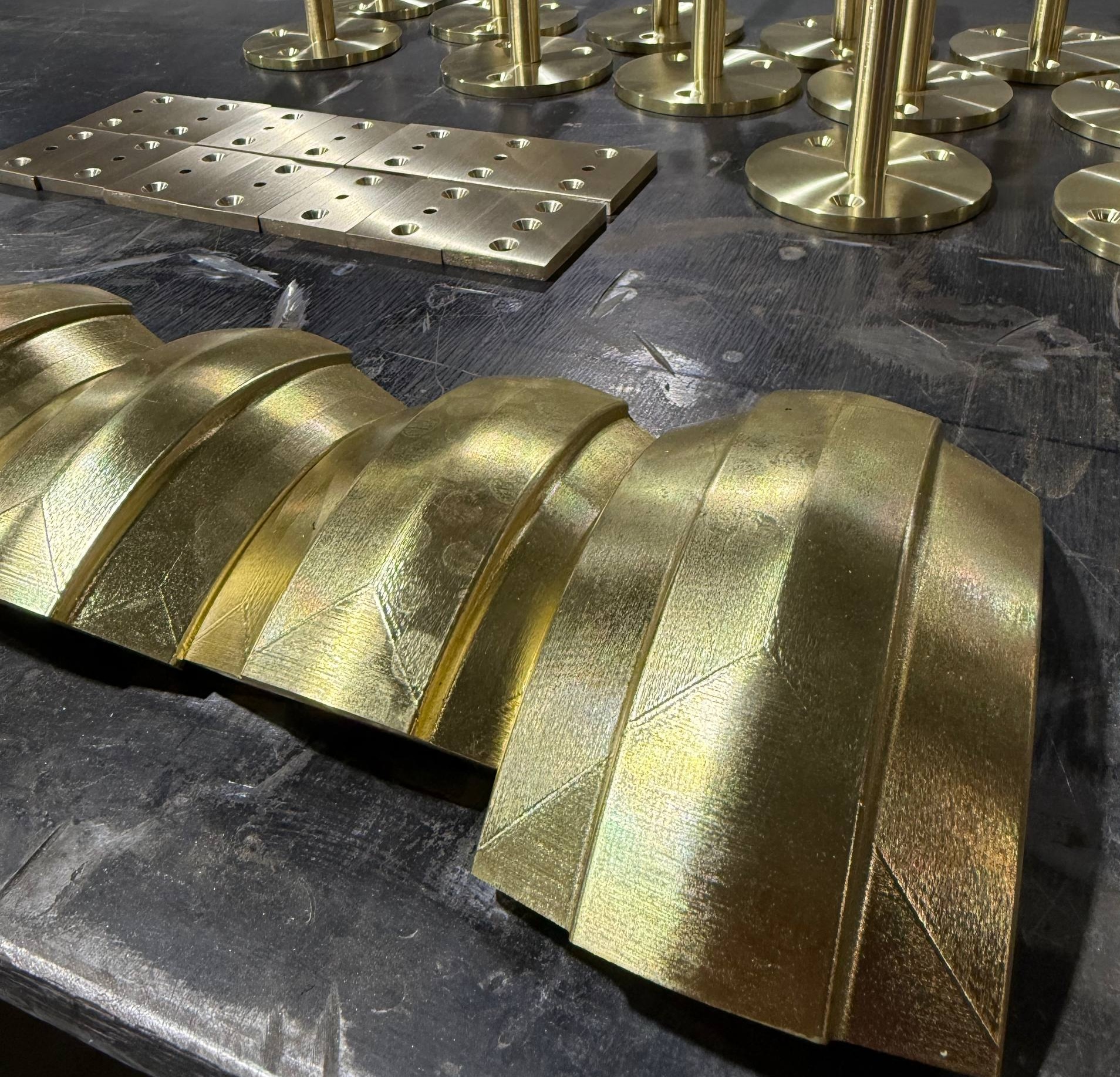
- ✔ Bronze wall cladding
- ✔ Decorative metal ceilings
- ✔ Luxury staircases
- ✔ Architectural screens
- ✔ Custom handrails
- ✔ Metal-clad doors
- ✔ Fireplace surrounds
- ✔ Brass and bronze feature walls
Unlike industrial components, these elements are designed to be seen. As a result, every detail matters.
Furthermore, architectural metalwork must seamlessly integrate with other premium materials such as glass, stone, wood, lighting systems, and custom millwork. Because of this, even the smallest inconsistency can become noticeable in the finished environment.
Precision Is the Defining Factor
One of the most significant differences between architectural metal fabrication and general metalwork is precision.
In general fabrication, small dimensional variations may have little impact on functionality. However, in architectural fabrication, those same variations can create visible alignment issues, inconsistent reveals, and installation challenges.
For example, a decorative bronze wall system may consist of dozens or even hundreds of individual panels. If each panel varies slightly from the intended dimensions, the overall appearance can quickly suffer.
Therefore, architectural fabrication requires strict quality control throughout every stage of production.
Moreover, fabricators must account for material tolerances, thermal expansion, installation conditions, and adjacent building elements long before the project reaches the site.
As a result, successful architectural projects often depend on millimeter-level accuracy.
The Finish Is Part of the Design
Another major difference lies in the finishing process.
In general metalwork, finishes are often applied primarily for protection. Paints, primers, and coatings help prevent corrosion and extend the lifespan of the product.
Architectural fabrication, however, requires a much more sophisticated approach.
In this environment, the finish is not simply a protective layer. Instead, it becomes an essential design feature.
Depending on the project, designers may specify:
- ✔ Mirror-polished stainless steel
- ✔ Satin brass
- ✔ Antique bronze patina
- ✔ Blackened steel
- ✔ Brushed stainless steel
- ✔ Clear anodized aluminum
- ✔ Custom specialty finishes
Furthermore, achieving a consistent appearance across multiple components requires extensive expertise and attention to detail.
Consequently, architectural fabricators must carefully control color, texture, reflectivity, grain direction, and surface quality throughout the entire manufacturing process.
Design Intent Drives the Process
General metalwork projects are often driven by engineering requirements and production efficiency.
Architectural fabrication, on the other hand, is driven by design intent.
Architects and designers frequently spend months developing a specific visual concept. Therefore, the fabricator’s role extends far beyond manufacturing components.
Instead, architectural fabricators become active collaborators in the design process.
For example, they may assist with:
- ✔ Material selection
- ✔ Design development
- ✔ Shop drawings
- ✔ Prototyping
- ✔ Mock-ups
- ✔ Finish samples
- ✔ Installation planning
Additionally, they must identify potential fabrication challenges before production begins.
By doing so, they help preserve the original design vision while ensuring practical constructability.
Material Selection Requires Specialized Knowledge
Material selection also plays a much larger role in architectural fabrication. While structural projects often prioritize strength and cost, architectural projects must balance performance, longevity, and visual impact. This becomes especially important when comparing materials such as brass and bronze, which offer distinct aesthetic qualities and aging characteristics. To learn more, explore our article Brass vs. Bronze: Choosing the Right Metal for Elegant Interior Details.
While structural projects often prioritize strength and cost, architectural projects must balance performance with visual impact.
As a result, fabricators need a deep understanding of how various metals behave throughout fabrication, finishing, and installation.
Common architectural metals include:
- ✔ Stainless steel
- ✔ Aluminum
- ✔ Brass
- ✔ Bronze
- ✔ Weathering steel
Each material offers unique characteristics.
For instance, bronze develops a rich and distinctive patina over time. Similarly, brass provides warmth and elegance that cannot easily be replicated with other materials.
Meanwhile, stainless steel delivers a clean, modern appearance while offering exceptional durability.
Therefore, selecting the appropriate material is a critical part of the project’s success.

Installation Success Starts Long Before Installation
Many people assume installation is where a project comes together. However, the reality is quite different.
Successful installations are typically the result of careful planning that begins months earlier.
Architectural fabricators must consider:
- ✔ Site conditions
- ✔ Structural support requirements
- ✔ Access limitations
- ✔ Installation sequencing
- ✔ Material movement
- ✔ Coordination with other trades
Because of this proactive approach, potential issues can often be resolved before fabrication even begins.
Consequently, installation becomes more efficient while maintaining the highest level of quality.
Why Luxury Projects Require Architectural Fabrication Specialists
Luxury residential, hospitality, commercial, and institutional projects demand a level of execution that exceeds standard fabrication practices.
After all, highly visible architectural features directly influence how people experience a space.
Therefore, architects and builders often seek fabrication partners with specialized architectural expertise.
These projects require:
- ✔ Advanced craftsmanship
- ✔ Exceptional precision
- ✔ Premium finishing capabilities
- ✔ Design collaboration
- ✔ Detailed quality control
- ✔ Extensive project coordination
Furthermore, architectural fabricators must understand both the technical and aesthetic requirements of every project.
Ultimately, the difference between ordinary fabrication and exceptional architectural metalwork is found in the details.
The MNR Custom Metal Approach
At MNR Custom Metal, we specialize in high-end architectural metal fabrication for luxury residential, hospitality, retail, and commercial projects throughout North America.
From custom bronze cladding and architectural ceilings to decorative feature walls, specialty metal finishes, and complex fabrication projects, our team combines engineering expertise with skilled craftsmanship.
Moreover, we work closely with architects, designers, builders, and developers throughout every stage of the project.
As a result, our clients receive architectural metal solutions that meet the highest standards of precision, durability, and visual excellence.
Because in architectural metal fabrication, success is not measured solely by function. Instead, it is measured by how flawlessly every detail contributes to the finished space.
See more
- Architectural metal work vs. Industrial metal fabrication: What’s the real difference?
- Tolerance and Precision in Architectural Metal: Why 1 mm Matters for Luxury Interiors
- How a Custom Metal Feature Becomes the Signature Element of a Space
- The featured «Metallic» partner of Feeel Design World Prize
- Innovative Metal Design Ideas for Outdoor Living Spaces
- Why Custom Metal Fabrication Timelines Get Delayed (And How to Prevent It)