Welded vs. Mechanically Fastened Architectural Metal: When to Use Each
In architectural metal, the connection method is rarely just a fabrication decision.
Whether two components are welded together or connected with screws, studs, clips, brackets, or other mechanical fasteners can affect almost every stage of a project — from appearance and fabrication to finishing, transportation, installation, and future maintenance.
A connection that looks ideal on a drawing may create unnecessary challenges in the shop or on site. At the same time, choosing mechanical fasteners simply because they are easier to install can compromise the clean appearance the architect intended.
The best solution depends on what the finished assembly needs to accomplish.
When Welding Makes Sense
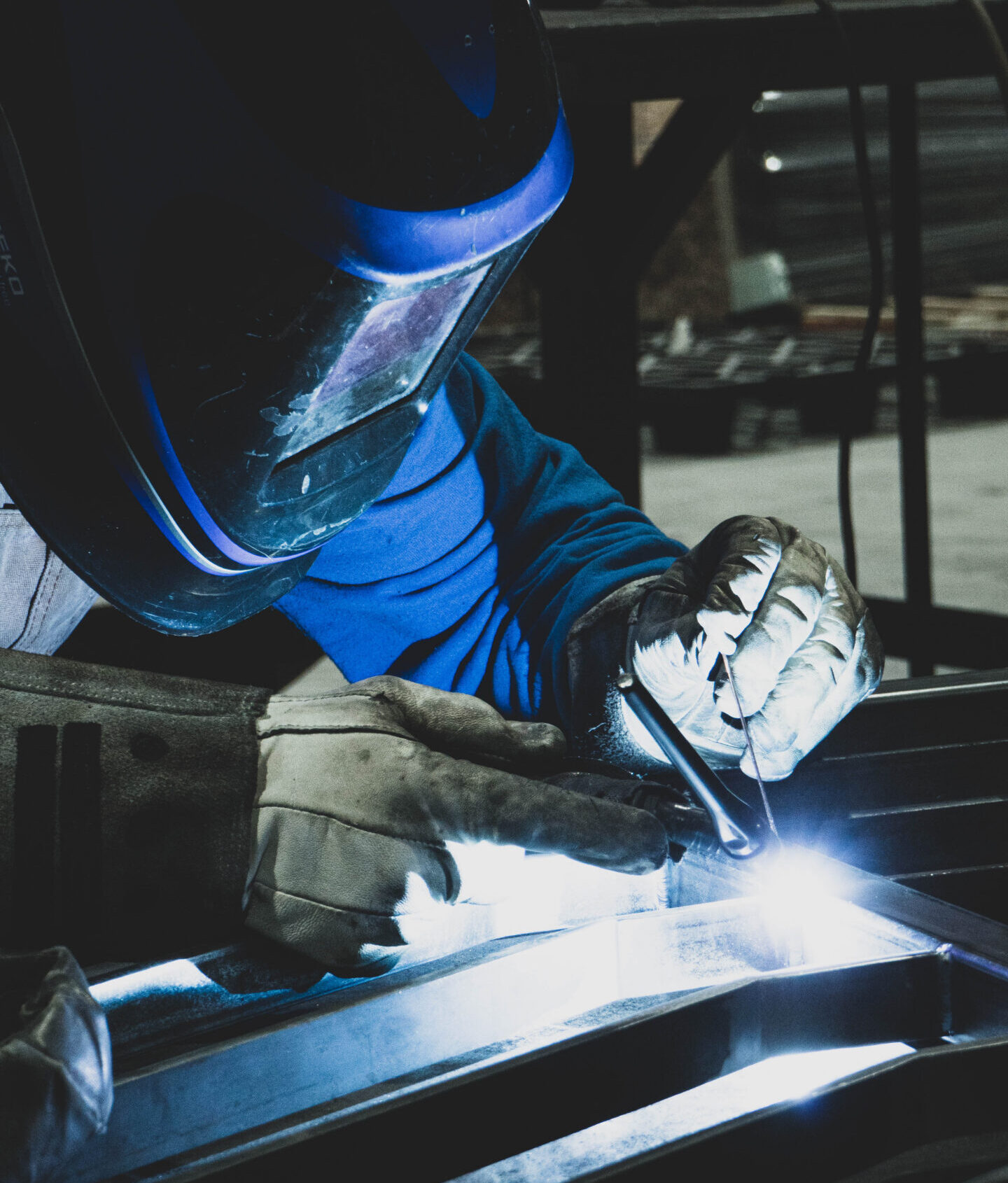
Welding is often the preferred approach when the goal is to create an assembly that appears to be one continuous piece of metal.
This is especially valuable for high-end architectural applications where visible screws, seams, brackets, or other hardware would interrupt the design.
Typical examples include:
- ✔ decorative metal surrounds;
- ✔ custom frames and trims;
- ✔ fabricated corners;
- ✔ reception desks and feature elements;
- ✔ metal furniture components;
- ✔ complex three-dimensional assemblies.
After welding, joints can often be ground, blended, and refinished so that the connection becomes extremely difficult to see.
This ability to create visual continuity is one of welding’s biggest advantages in architectural metalwork.
The Finish Changes the Equation
Not every welded joint disappears.
This is an important distinction.
Welding introduces heat into the material. Depending on the alloy, thickness, geometry, and welding process, that heat can cause distortion, discoloration, or visible changes around the joint.
Grinding the weld is only part of the process. On exposed stainless steel, brass, bronze, or other decorative metals, the fabricator may also need to restore the surrounding finish so the welded area visually matches the rest of the component.
A directional brushed finish makes this particularly important. If the grain changes around a welded corner, the connection may still be noticeable even when the weld itself is perfectly smooth.
The American Institute of Steel Construction’s guidance on architecturally exposed steel similarly emphasizes that visible steel requires additional attention to connections, surface appearance, weld finishing, viewing distance, and other aesthetic requirements.
Architecturally Exposed Structural Steel — American Institute of Steel Construction
Although structural AESS and decorative architectural metal are different scopes, the underlying principle is relevant to both: when people can see the connection, the connection becomes part of the architecture.
When Mechanical Fastening Is the Better Choice
Mechanical connections solve a different set of problems.
Instead of permanently joining components, fabricators can assemble pieces using methods such as:
- ✔ screws;
- ✔ threaded studs;
- ✔ bolts;
- ✔ clips;
- ✔ brackets;
- ✔ Z-clips;
- ✔ concealed fastening systems.
The biggest advantage is that the assembly does not necessarily become permanent.
A panel can be removed. A damaged component can potentially be replaced. Installers can make adjustments on site. Large assemblies can also be divided into manageable sections for transportation.
For many architectural applications, those advantages outweigh the benefits of welding everything into one piece.
Concealed Fasteners Can Provide Both Advantages
Mechanical fastening does not automatically mean visible screws.
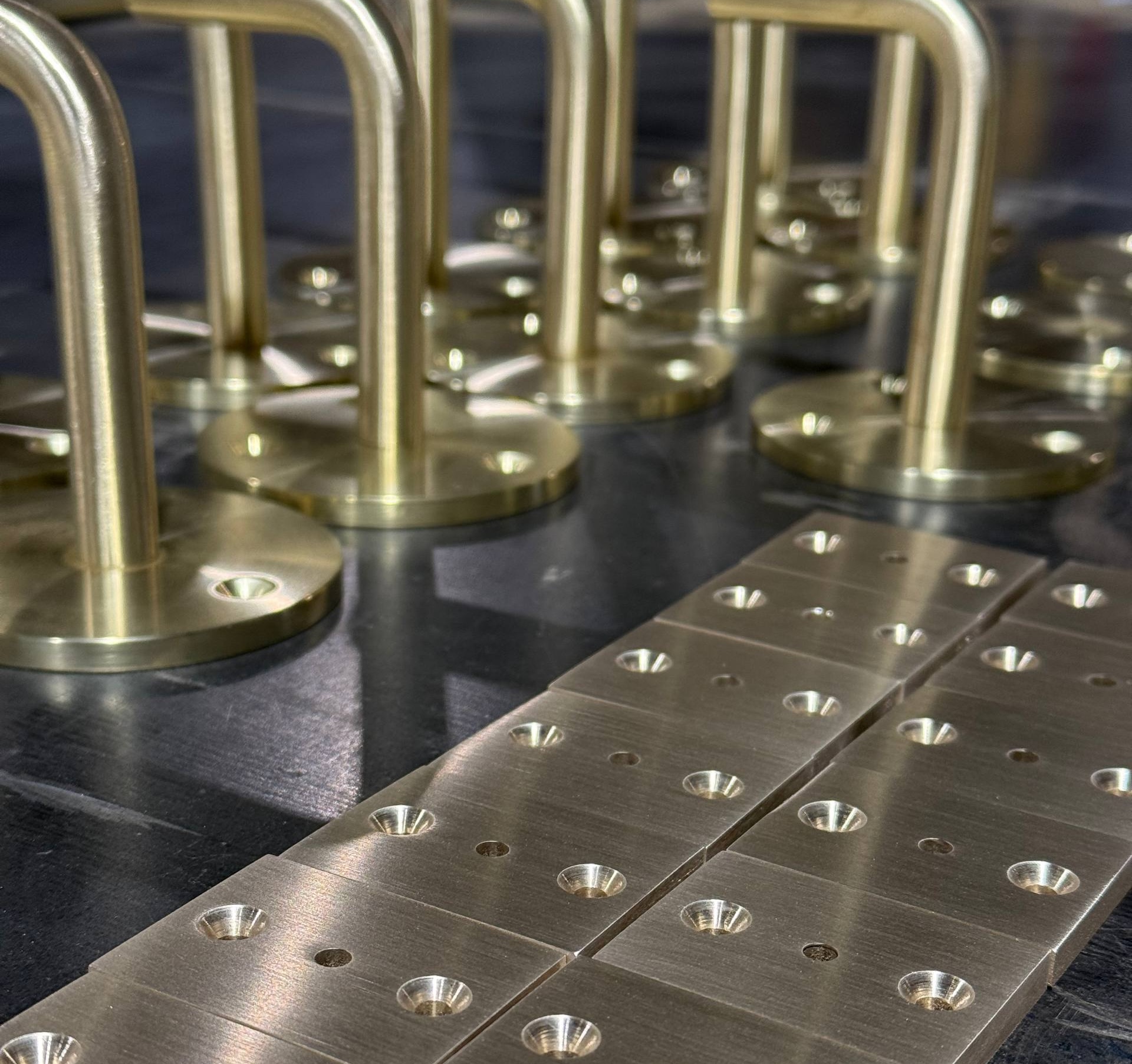
Many architectural metal assemblies use concealed fastening systems that keep the exposed face clean while allowing components to remain removable.
For example, a decorative wall panel may appear completely uninterrupted from the room side while being attached to a substrate through hidden clips or brackets behind the panel.
This approach can provide much of the visual simplicity associated with welded construction without permanently connecting every component.
For large wall panels, column covers, ceiling elements, millwork cladding, and serviceable assemblies, concealed mechanical fastening is often worth considering early in the design process.
Transportation Can Determine the Connection Method
One of the easiest mistakes to make is designing an assembly around how it will look after installation without considering how it will reach the site.
A fully welded feature may look ideal in the finished space but become difficult or expensive to ship.
Large assemblies have to pass through:
- ✔ shop doors;
- ✔ trucks and shipping containers;
- ✔ loading docks;
- ✔ elevators;
- ✔ corridors;
- ✔ finished building openings.
Dividing a large feature into several mechanically connected sections can dramatically simplify transportation and handling.
In other situations, the fabricator may weld smaller assemblies in the shop and mechanically connect those assemblies together on site.
The best connection strategy often combines both methods.
Installation Matters Too
Site conditions are rarely as controlled as shop conditions.
Walls may not be perfectly straight. Floors can vary in elevation. Adjacent millwork, stone, glass, or drywall may have its own tolerances.
Mechanical connections can provide adjustment during installation.
Slots, brackets, clips, and concealed fastening points can allow installers to make small corrections before locking an assembly into its final position.
A completely rigid welded assembly provides much less flexibility.
This is why installation requirements should influence connection design long before fabrication begins.
Think About Future Access
Another question should be asked early:
Will anyone ever need to get behind this metal?
Architectural metal frequently covers lighting, electrical components, HVAC equipment, plumbing, controls, or other building systems.
If access may be required in the future, permanently welding the assembly closed can create a maintenance problem.
A concealed removable panel may look almost identical from the finished side while allowing technicians to access the space behind it without damaging the architectural metal.
Repairability matters for the metal itself as well.
If one mechanically fastened panel becomes damaged years later, it may be possible to replace that individual component. With a fully welded assembly, the repair can become considerably more complicated.
Cost Is More Complicated Than Welded vs. Screwed
There is no universal rule that welding is more expensive or mechanical fastening is cheaper.
The real cost comes from the entire process.
A welded connection may require:
Welding → grinding → surface preparation → finish restoration → inspection → careful packaging.
A mechanical connection may require:
Additional detailing → hardware → inserts → brackets → machining → alignment → additional installation time.
A concealed fastening system can actually be more complex than a straightforward welded joint.
The correct comparison is therefore not the cost of a weld versus the cost of a screw. It is the total cost of producing, finishing, shipping, installing, and maintaining the assembly.
Often, the Best Solution Is Both
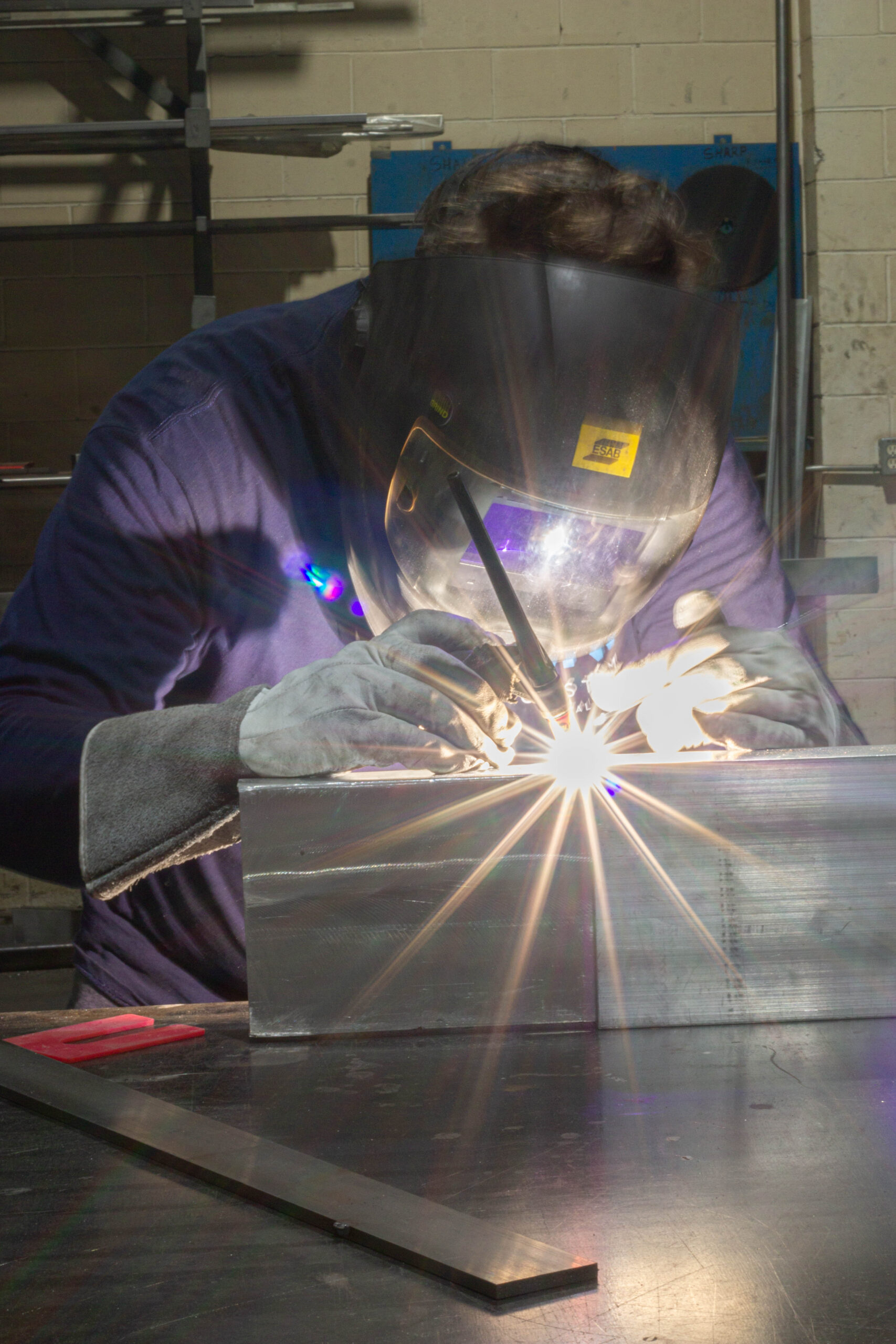
High-quality architectural metalwork frequently uses a combination of welded and mechanical connections.
For example, a fabricator might weld and finish individual corners in the shop to create seamless-looking components, then use concealed brackets to connect those components to millwork or the building structure.
That provides controlled shop-quality finishing where appearance matters while preserving flexibility during transportation and installation.
The connection strategy becomes part of the fabrication design rather than an isolated technical decision.
Make the Decision Before Fabrication
Connection methods should ideally be considered during shop drawing development — not when finished components arrive on site.
Before deciding how an architectural metal assembly should connect, the project team should consider:
What will remain visible? How important is a seamless appearance? Can the assembly be transported in one piece? How much adjustment will installers need? Does anything behind the metal require future access? Could individual components eventually need replacement? How will welding affect the specified finish?
Answering these questions early can prevent expensive redesigns later.
There is no single connection method that works for every architectural metal project.
Welding can create clean, continuous forms and eliminate visible hardware. Mechanical fastening can make assemblies easier to transport, install, adjust, service, and replace. Concealed fastening systems can sometimes provide the advantages of both.
The goal is not to maximize welding or eliminate fasteners.
The goal is to design each connection around the appearance, finish, fabrication process, transportation requirements, installation conditions, and long-term use of the finished architectural element.
For custom architectural metalwork, those decisions should happen early — because a connection may be small, but its impact on the finished project can be significant.
See more
- Bespoke vs. Off-the-Shelf: Why Custom Metal Fabrication is Worth the Investment
- The Benefits of Custom Brass Fabrication in Luxury Interiors
- Custom High-End Metal Features that Elevate Luxury Interiors: A Design Guide for Custom Home Builders and Interior Designers
- The Role of Metal Fabrication in Commercial Interior Design
- Brass vs. Bronze: Choosing the Right Metal for Elegant Interior Details
- The Art of Precision: What Sets High-End Metal Fabrication Apart