Why a Metal Finish Sample Doesn’t Always Match the Final Product
A metal finish sample is one of the most important tools for approving the appearance of custom architectural metal before fabrication begins. An architect or designer reviews the color, texture, sheen, and overall character of the finish and approves it as the visual reference for the project.
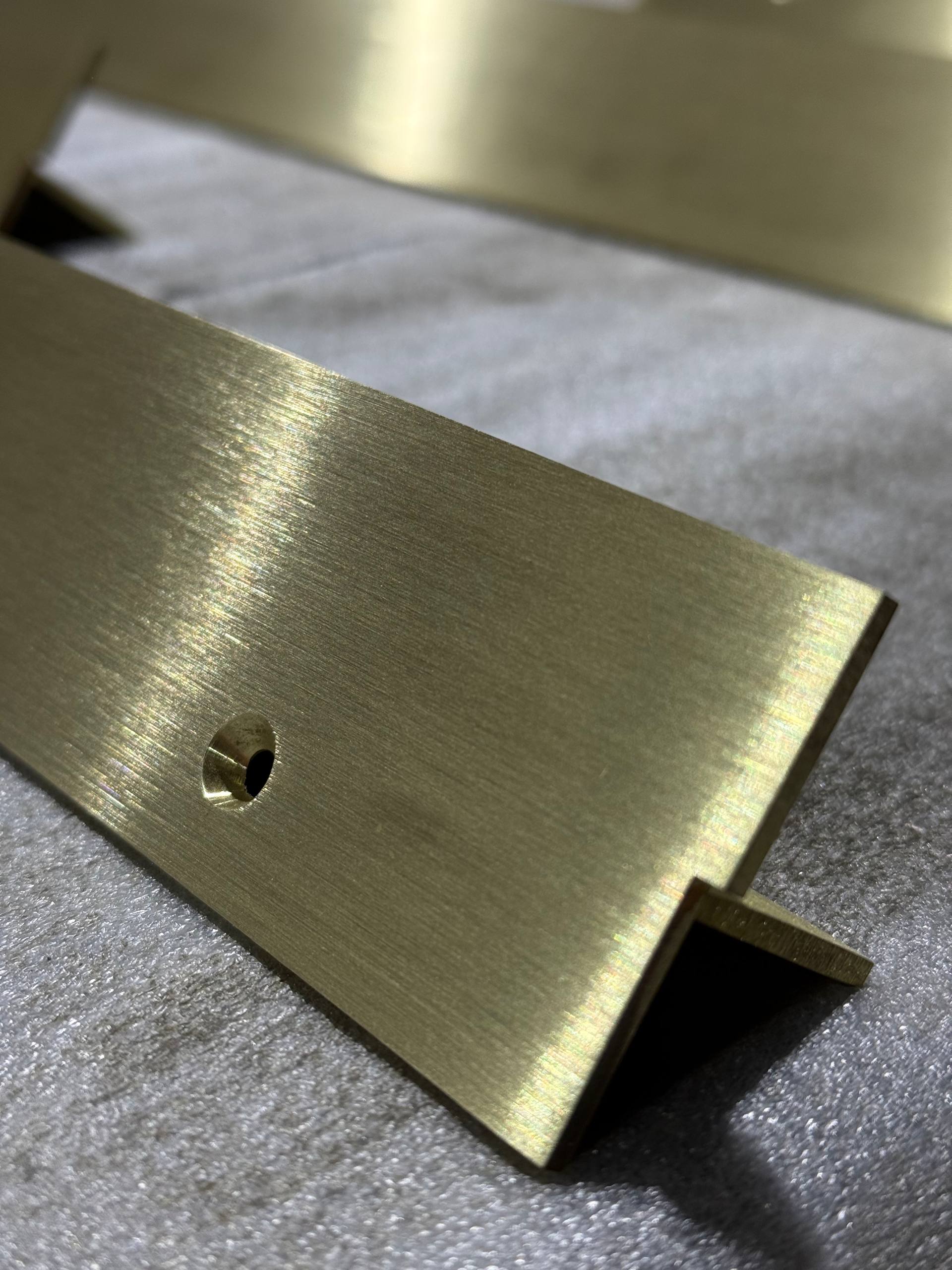
Several weeks later, the finished metal panels arrive on site.
The material is correct. The fabrication meets the approved dimensions. The finishing team followed the agreed process.
Yet the final product may not look exactly like the original metal finish sample.
This situation occurs in custom architectural metal fabrication more often than many designers expect. It becomes particularly relevant when projects involve hand-applied patinas, brushed brass, bronze, stainless steel, or large decorative metal surfaces.
The difference does not necessarily indicate poor workmanship. Instead, it often reflects the limitations of using a small sample to represent a much larger and more complex architectural surface.
Understanding these differences helps architects, designers, millwork companies, and contractors establish realistic expectations before production begins.
1. A Small Metal Finish Sample Cannot Represent Every Surface Condition
Most metal finish samples measure only a few inches across.
They provide an excellent starting point for evaluating color, texture, reflectivity, and overall appearance. However, a small sample cannot fully demonstrate how the same finish will appear across a large surface.
Consider a 4-inch antique brass sample.
Its color may appear extremely consistent because the viewer sees only a small area. Subtle variations in tone can be almost invisible.
Now imagine applying the same finish to a 12-foot reception desk or an entire wall of decorative brass panels.
The larger surface can reveal characteristics that were difficult to see on the original sample:
- ✔ Natural variations in color and tone
- ✔ Differences in surface texture
- ✔ Changes in light reflection
- ✔ Subtle variations in patina distribution
- ✔ Transitions between separately finished components
These characteristics become increasingly visible as the finished area expands.
A metal finish sample should therefore establish the intended appearance, but it should not automatically represent every visual characteristic of a large finished installation.
For significant architectural features, larger samples or full-scale mockups can provide a more accurate representation.
2. Hand-Applied Patinas Are Not Perfectly Repeatable
Hand-applied patinas remain popular in luxury architectural interiors because they create depth, character, and visual complexity.
Unlike a standard painted coating, a chemical patina develops through reactions between the metal surface and finishing chemicals.
Several factors can influence the final appearance:
- ✔ Metal composition and surface condition
- ✔ Chemical concentration
- ✔ Application technique
- ✔ Reaction time
- ✔ Temperature and humidity
- ✔ Surface preparation
- ✔ Cleaning and neutralization procedures
Even when a skilled finisher follows the same process, subtle differences can occur between individual components.
For example, two bronze panels may receive the same patina treatment but develop slightly different tonal characteristics. One panel might appear warmer, while another develops a darker or more complex appearance.
This variation is particularly noticeable with antique brass, blackened bronze, and other specialty finishes that rely on controlled chemical reactions.
Natural variation does not mean that any result should be considered acceptable.
A professional finishing process should establish an approved visual standard and define an acceptable range of variation.
The objective is controlled consistency rather than absolute uniformity.
3. Metal Composition Can Influence the Final Color
Two pieces of metal may look identical before finishing but respond differently during the finishing process.
This can happen when materials come from different production batches or contain slightly different alloy compositions.
Brass and bronze are particularly relevant examples because their copper content and other alloying elements can influence how their surfaces react to chemical treatments.
Surface preparation matters as well.
One panel may have a slightly different initial texture or surface condition than another. Even when both receive the same patina process, the finished appearance can differ.
For architectural projects involving multiple visible components, maintaining material consistency becomes an important part of finish control.
Whenever practical, fabricators should coordinate material sourcing, surface preparation, and finishing procedures across the entire project.
4. Grain Direction Changes How Metal Looks
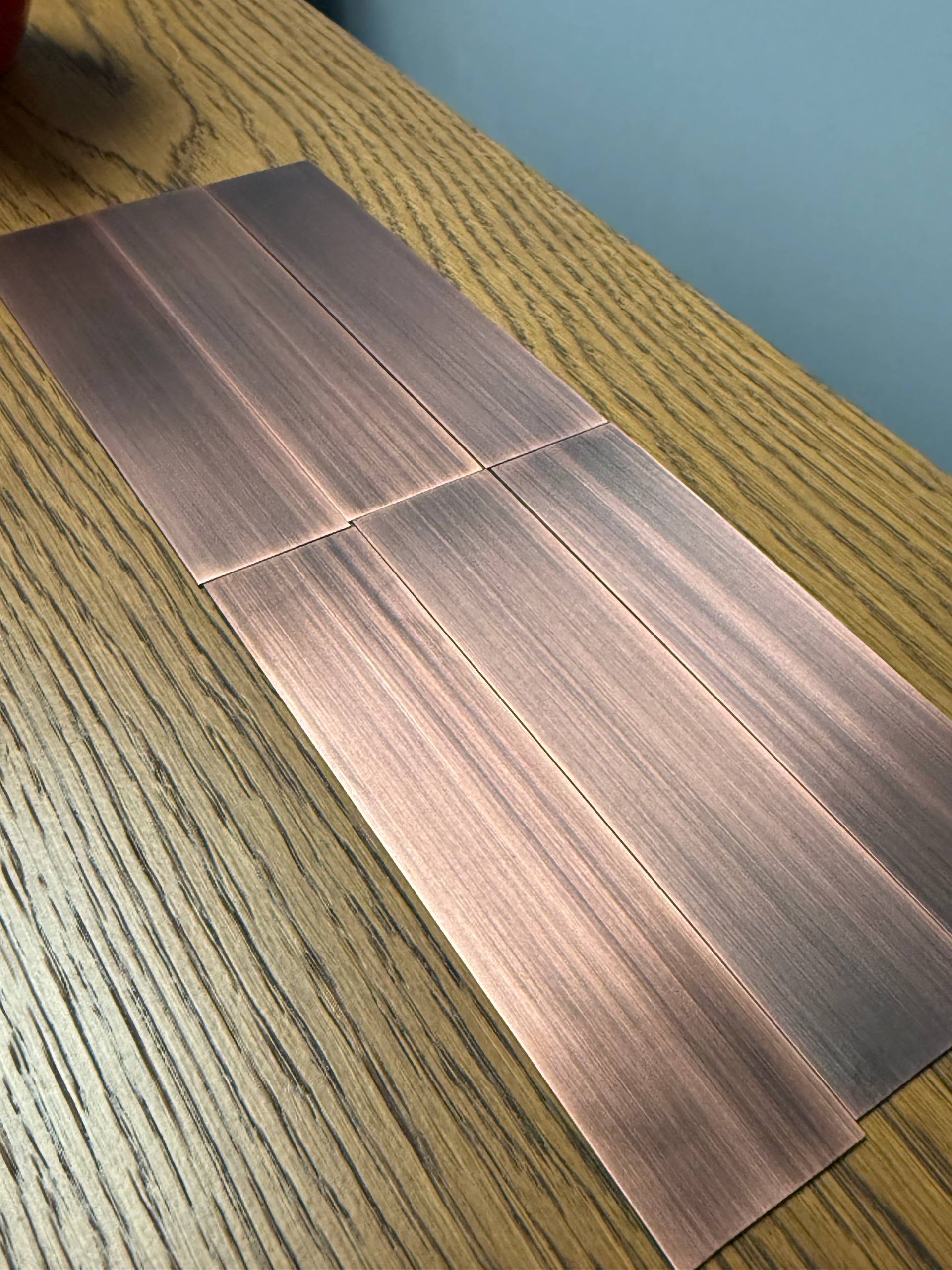
Grain direction plays a major role in the appearance of brushed architectural metal.
A brushed finish creates microscopic directional lines across the surface. Those lines interact with light differently depending on their orientation.
A panel with vertical grain may appear lighter or darker than an adjacent panel with horizontal grain, even when both panels use exactly the same material and finish.
This effect becomes particularly noticeable on:
- ✔ Cabinet doors
- ✔ Wall panels
- ✔ Elevator surrounds
- ✔ Reception desks
- ✔ Metal trims
- ✔ Column covers
- ✔ Large millwork assemblies
That is why grain direction should be specified before fabrication begins.
It should also remain consistent across adjacent components whenever the design requires a continuous visual appearance.
5. Lighting Can Completely Change the Appearance of a Finish
One of the most underestimated variables in metal finish approval is lighting.
A metal finish sample reviewed under bright office lighting may look noticeably different after installation in a restaurant, hotel, residence, or retail environment.
Warm lighting can emphasize the yellow and red tones in brass and bronze.
Cool lighting may make the same surface appear more neutral or muted.
Directional lighting can also exaggerate grain patterns, surface texture, and subtle variations in hand-applied finishes.
Whenever finish appearance is particularly important, designers should evaluate metal finish samples under lighting conditions that resemble the final environment.
The viewing angle matters too.
Architectural metal interacts strongly with surrounding light, meaning the same panel can appear different as a person moves through the space.
6. Large Surfaces Make Small Variations More Visible
Scale changes perception.
A minor tonal difference that appears insignificant on a small sample can become obvious when repeated across several large panels.
This becomes especially important when panels meet directly beside one another.
A slight difference between two isolated pieces may go unnoticed. Place those same pieces side by side across a large wall, and the transition can become much more apparent.
For this reason, fabricators often need to consider the entire assembly rather than finishing individual components independently.
Whenever possible, adjacent panels should be reviewed together before shipment.
This allows the fabricator to evaluate overall consistency and determine whether individual components should be repositioned or refinished.
7. Surface Texture Affects the Perceived Color
Color is only one part of a metal finish.
Surface texture can dramatically influence how that color appears.
A highly polished brass surface reflects its surroundings and may appear brighter or more dynamic.
A satin or brushed surface diffuses light differently and often creates a softer appearance.
A heavily textured or distressed surface introduces additional shadows and highlights that can make the same base material appear darker or more complex.
The Australian Stainless Steel Development Association (ASSDA) explains the relationship between surface finishing, grain direction, and reflectivity in its technical article “No 4: The Workhorse Finish.”
The article highlights how directional surface finishes influence the appearance of stainless steel and why consistent finishing matters in architectural applications.
Technical reference: No 4: The Workhorse Finish — ASSDA
Although the article focuses on stainless steel, the broader principle also applies to decorative architectural metals: surface texture and preparation significantly influence the final visual appearance.
8. The Approved Sample Should Be a Reference Standard
The most effective way to manage expectations is to establish clearly what the approved metal finish sample represents.
It should become the visual reference for:
- ✔ Color
- ✔ Texture
- ✔ Sheen
- ✔ Grain
- ✔ General character of the finish
For finishes with natural variation, the project team may also approve a range rather than a single sample.
For example, approving three samples representing the light, target, and dark limits of an acceptable patina can provide a much clearer standard than approving only one small piece.
This approach gives designers better control while giving fabricators realistic boundaries within which to work.
9. When a Full-Scale Mockup Makes Sense
Not every project requires a full-scale mockup.
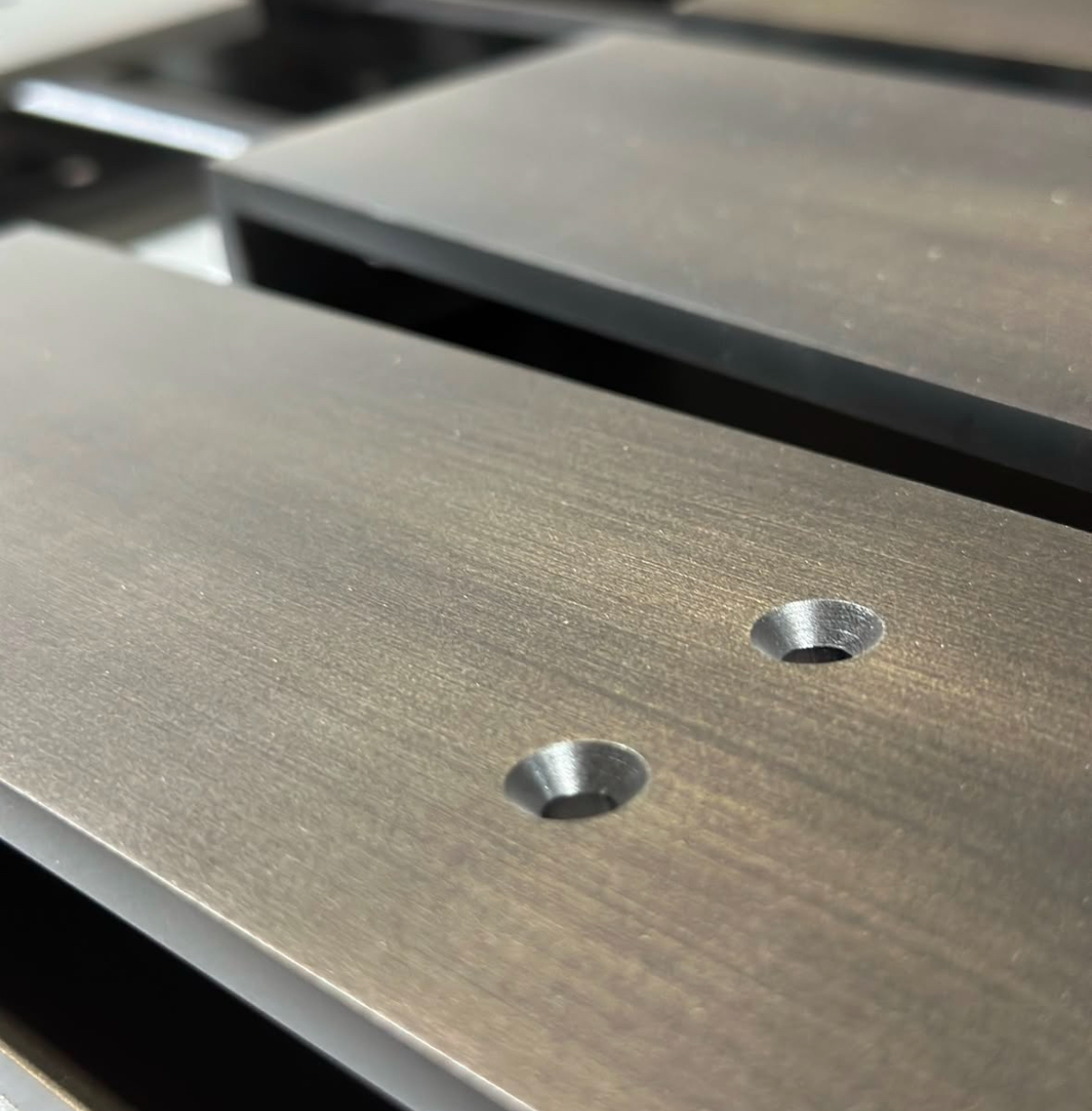
However, a larger mockup can be extremely valuable when the project includes large continuous surfaces, highly visible feature elements, complex patinas, or finishes where consistency is critical.
A mockup allows the project team to evaluate:
- ✔ Finish variation
- ✔ Grain direction
- ✔ Panel transitions
- ✔ Joint appearance
- ✔ Lighting interaction
- ✔ Relationship with surrounding materials
Resolving these questions before full production is considerably easier than addressing them after the finished metal arrives on site.
Metal Finish Samples Set the Standard — Not an Exact Copy of Every Square Inch
A metal finish sample remains one of the most important approval tools in custom architectural metal fabrication.
But architects, designers, contractors, and millwork companies should understand exactly what that approval means.
Metal is a real material. Brushed surfaces interact with light. Chemical patinas develop naturally. Large surfaces reveal variations that small samples cannot show.
The goal should not always be to make every square inch mathematically identical.
The goal is to establish a controlled visual standard and reproduce the intended design as consistently as the material and finishing process allow.
At MNR Custom Metal, we work closely with architects, designers, contractors, and millwork companies to establish finish expectations before fabrication begins. Careful sample approval, material selection, grain control, fabrication planning, and finishing coordination help ensure that the final architectural metalwork reflects the original design intent.
See more
- Creating Unique Metal Artwork for Interior Design
- Innovative Metal Design Ideas for Outdoor Living Spaces
- Common Budget Mistakes When Designing Custom Metal Features
- Choosing the Right Metal Finish for Your Custom Home: A Guide for Builders and Designers
- Choosing the Perfect Finish for Your Custom Metal Project: A Guide for Designers and Millwork Experts
- Bespoke vs. Off-the-Shelf: Why Custom Metal Fabrication is Worth the Investment