Why High-End Designers Prefer Hand-Applied Patina Over Powder Coating
Hand-applied patina has become one of the most sought-after finishes in luxury residential and hospitality design because it offers a level of depth, individuality, and authenticity that standard powder coating simply cannot replicate.
While powder coating remains a practical option for many commercial applications, hand-applied patina offers something entirely different: depth, individuality, and character that cannot be replicated by automated finishing systems.
At MNR Custom Metal, we regularly work with designers looking for custom bronze, brass, and stainless steel finishes that feel architectural, timeless, and truly unique. In many of these projects, hand-applied patina becomes the defining detail that elevates the entire space.
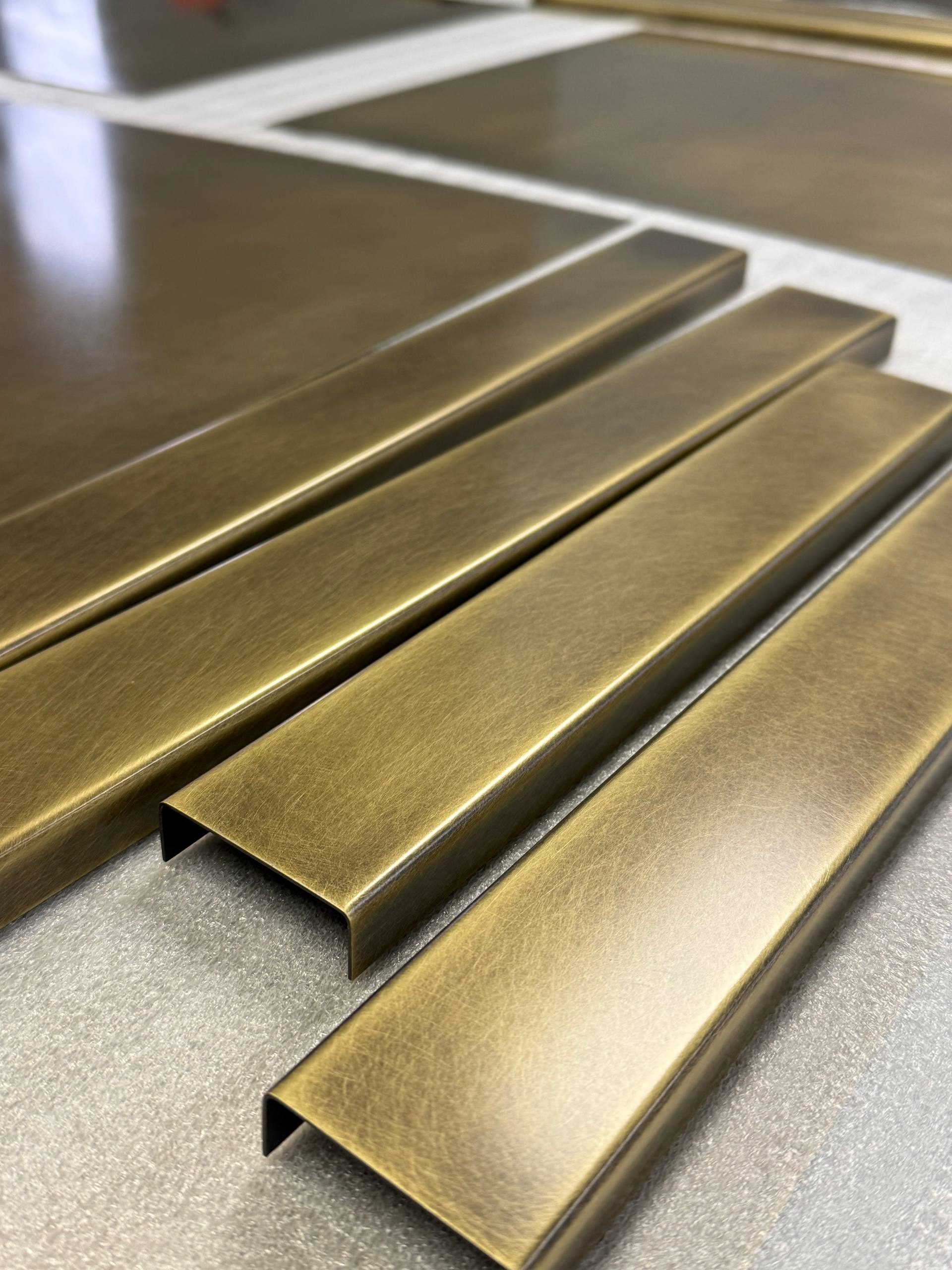
The Difference Between Patina and Powder Coating
Powder coating is an industrial finishing process where dry powder is electrostatically applied to metal and cured under heat. It creates a uniform, durable surface available in thousands of colors and textures.
Hand-applied patina, on the other hand, is a much more artisanal process. It involves chemically reacting with the metal surface to create natural variations in tone, texture, and depth. Skilled finishers carefully control heat, chemical application, layering, and timing to achieve the final appearance.
The result is not just a “color.” It is a living finish with movement, variation, and visual complexity.
According to trends frequently highlighted by Dezeen, luxury interior design continues moving toward authentic materials, tactile finishes, and highly customized surfaces that create warmth, individuality, and a stronger connection to craftsmanship.
Why Designers Choose Hand-Applied Patina
1. Every Piece Is Unique
One of the biggest advantages of hand-applied patina is exclusivity. No two pieces will ever look exactly the same.
Even when working within the same finish specification, slight tonal variation naturally occurs across the metal surface. In luxury interiors, this uniqueness is often considered a major advantage rather than a flaw.
Designers working on custom homes, boutique hotels, restaurants, and luxury retail spaces want materials that feel one-of-one. Patina helps create that feeling.
By comparison, powder coating is intentionally uniform. While consistency can be useful in large-scale commercial applications, it often lacks the richness and individuality expected in premium architectural environments.
2. Patina Creates More Visual Depth
Hand-applied finishes interact with light very differently than painted or coated surfaces.
Bronze and brass patina can reveal:
- ✔ undertones,
- ✔ subtle highlights,
- ✔ darker shadowing,
- ✔ brushed texture,
- ✔ and natural movement across the surface.
This layered appearance creates depth that changes throughout the day depending on lighting conditions.
In luxury interiors, these subtle visual changes help a space feel warmer and more sophisticated. The metal becomes part of the atmosphere rather than simply a functional material.
3. It Feels More Luxurious and Authentic
Luxury design often comes down to emotional perception.
A hand-finished bronze partition, custom hood, or architectural feature immediately communicates craftsmanship and attention to detail. People may not consciously understand why it feels expensive, but they recognize the difference.
That is because authentic patina reflects actual interaction with real metal instead of covering the surface with a synthetic coating.
This is especially important in modern high-end interiors where natural stone, wood grain, textured plaster, and artisan materials are becoming more desirable than perfectly uniform manufactured finishes.
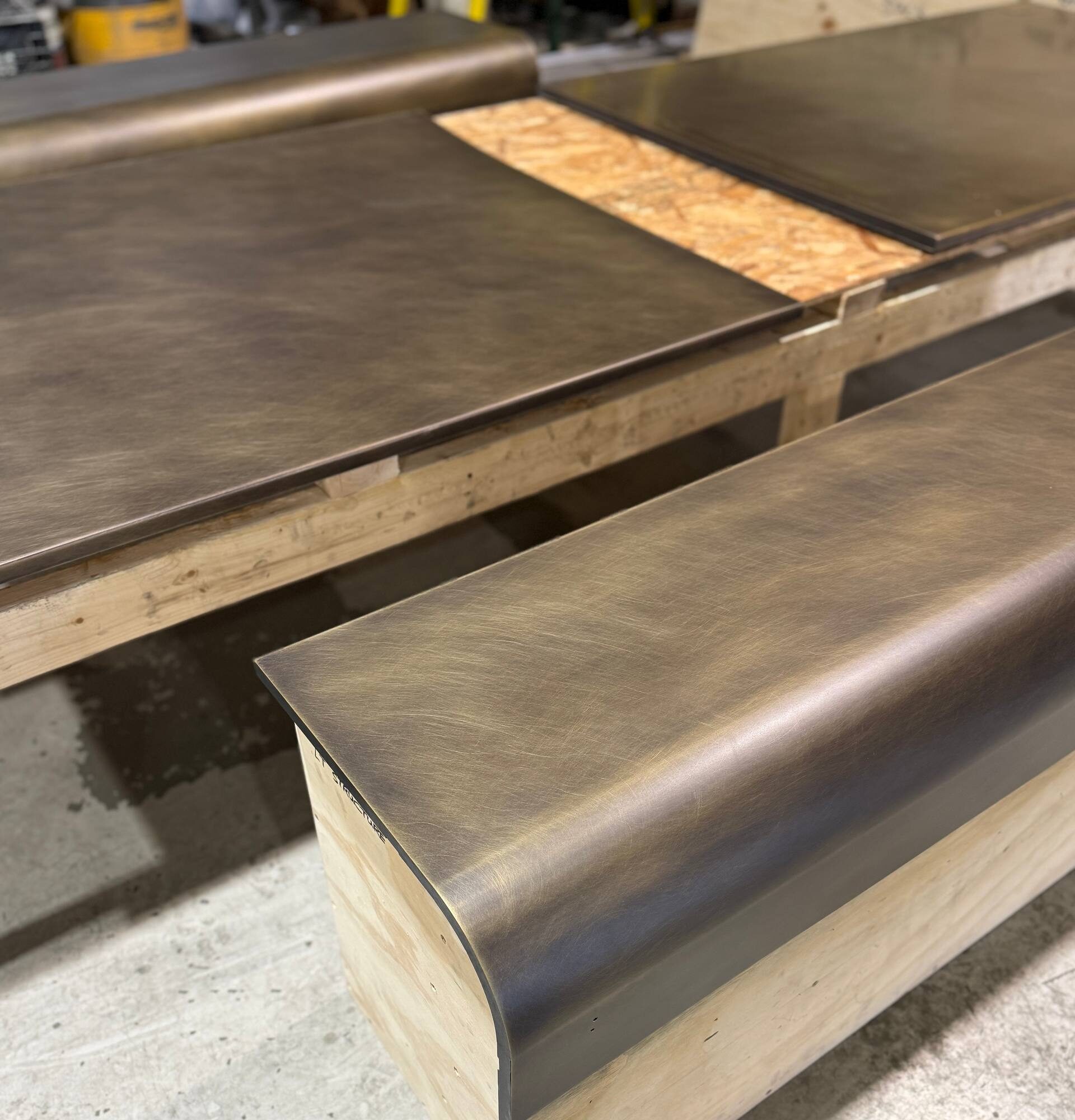
4. Patina Ages Beautifully Over Time
One of the most overlooked benefits of patina is how gracefully it ages.
Many powder-coated finishes begin to look worse when damaged. Chips, scratches, and wear patterns can expose the substrate underneath and create visible inconsistencies.
Patinated metal behaves differently. Minor wear often blends naturally into the finish and can even enhance the character of the piece over time.
This makes hand-applied finishes particularly attractive for:
- ✔ luxury hospitality projects,
- ✔ custom bars,
- ✔ feature walls,
- ✔ railings,
- ✔ furniture accents,
- ✔ and high-touch architectural details.
The finish evolves naturally instead of simply deteriorating.
5. Hand-Applied Patina Supports True Customization
Another reason designers prefer patina is flexibility.
A custom finish can be adjusted to match:
- ✔ surrounding materials,
- ✔ lighting conditions,
- ✔ stone tones,
- ✔ wood finishes,
- ✔ or overall project mood.
At MNR Custom Metal, many patina finishes are developed specifically for individual projects rather than selected from a standard catalog. This level of customization allows designers to create a much more cohesive and intentional final result.
In many cases, clients are not looking for “gold” or “bronze.” They are looking for a very specific warmth, depth, or aged appearance that only a custom-developed finish can provide.
The Role of Artisan Fabrication
Hand-applied patina is not only about chemistry. It also requires fabrication methods that support a high-end finish outcome.
Poor weld preparation, uneven grinding, inconsistent brushing, or low-quality metal selection can completely ruin a premium patina finish.
That is why experienced fabrication and finishing teams matter so much in luxury metalwork. The finish process begins long before chemicals are applied.
True architectural metal fabrication combines:
- ✔ precision engineering,
- ✔ fabrication expertise,
- ✔ finishing knowledge,
- ✔ and artistic judgment.
Without all four, achieving a consistent luxury result becomes extremely difficult.
When Powder Coating Still Makes Sense
Despite the advantages of patina, powder coating still has an important place in architectural metal fabrication.
It is often the better choice for:
- ✔ highly exposed exterior environments,
- ✔ budget-sensitive projects,
- ✔ large commercial applications,
- ✔ or projects requiring strict color consistency.
However, when the goal is creating warmth, individuality, and premium visual impact, hand-applied patina typically delivers a much more elevated result.
In luxury design, materials should feel intentional, authentic, and memorable. Hand-applied patina offers a level of richness and individuality that powder coating simply cannot replicate.
That is why so many high-end designers continue to choose custom patinated bronze, brass, and stainless steel finishes for premium architectural spaces.
The finish becomes more than protection for the metal. It becomes part of the story, atmosphere, and identity of the project itself.
For designers, architects, and builders looking to create truly custom metal features, the difference between a coated surface and a hand-finished patina is immediately visible.
See more
- Innovative Metal Fabrication Trends for Modern Luxury Interiors
- Why Custom Metalwork is a Key Element in High-End Retail, Hospitality, and Office Interiors
- Elevating Kitchens and Bathrooms with Custom Metal Accents
- The Color of Metal: How Finishes Shape Mood and Atmosphere
- The Hidden Difference Between Architectural Metal Fabrication and General Metalwork
- How to Choose the Right Metal Fabricator: 5 Key Criteria for Architects & Builders